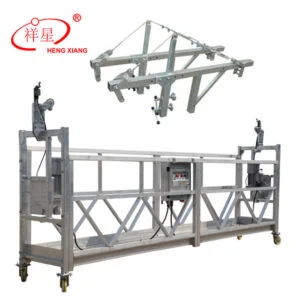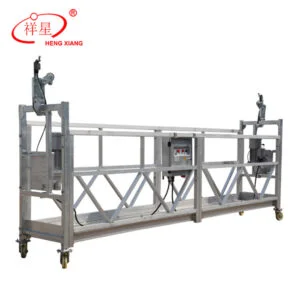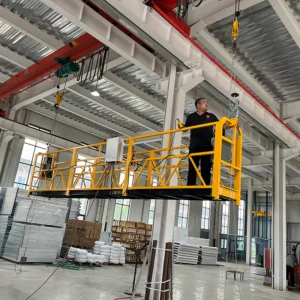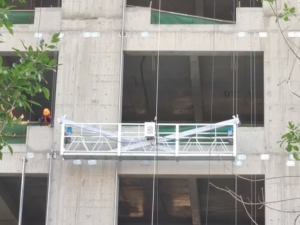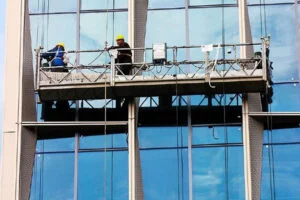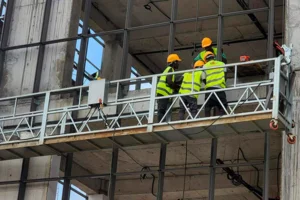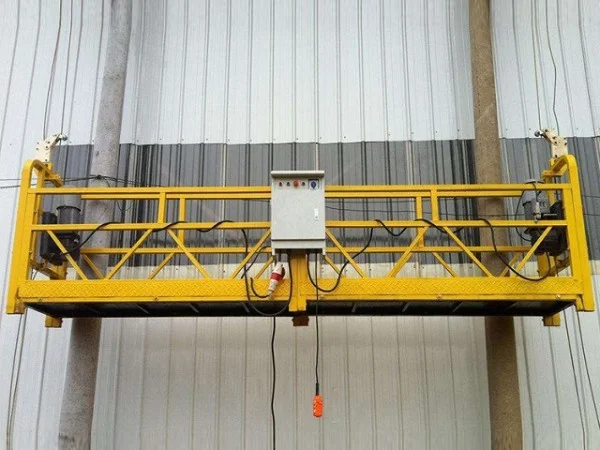
The Attached climbing scaffolding system is a self‑climbing protection system specially designed for high‑rise and super high‑rise building construction. It is erected to a certain height and attached to the engineering structure. Relying on its own lifting equipment and devices, it can climb or descend layer by layer along with the engineering structure.
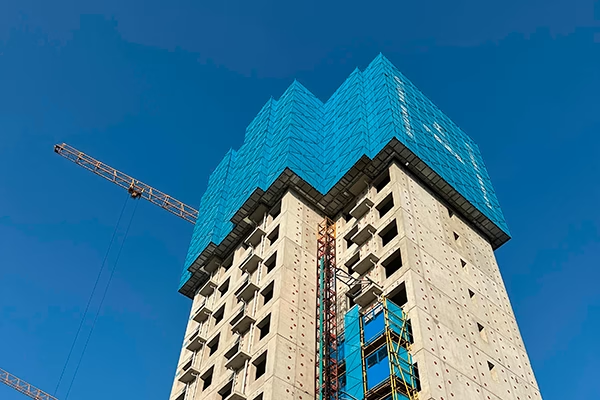
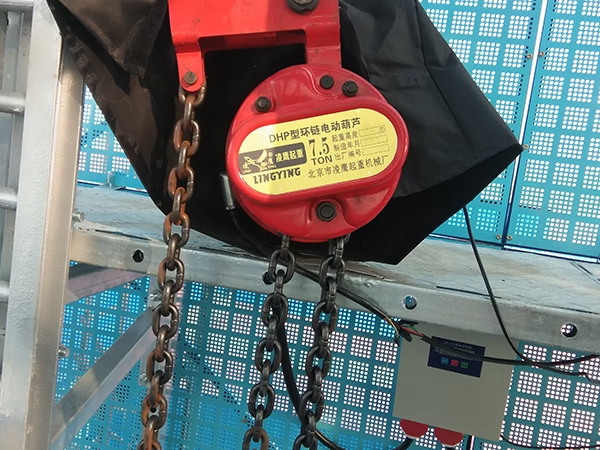
It consists of an integrated climbing scaffolding frame structure, attachment supports, anti-tilt devices, fall protection devices, lifting mechanisms, and control devices.
By attaching itself to the main building structure, it uses an electric or hydraulic system to achieve automatic lifting of the whole or part, thus replacing the traditional manual erection and dismantling of scaffolding, greatly improving construction efficiency and safety.
Technical Principles
Climbing formwork system mainly consists of attachment supports, frame structure, lifting mechanism, and safety protection devices. Its working principle is based on mechanical mechanics and automated control technology.
Through a precise synchronous control system, it ensures that each lifting point rises and falls synchronously, maintaining the levelness and stability of the frame. At the same time, it is equipped with anti-tilt and fall protection devices to ensure absolute safety during construction.
Application
The attached lifting scaffold is widely used in the main structure construction phase of high-rise residential buildings, commercial complexes, office buildings, and other high-rise buildings. It is particularly suitable for construction projects with complex facades and high construction difficulty, significantly shortening the construction period, reducing labor costs, and improving construction quality.
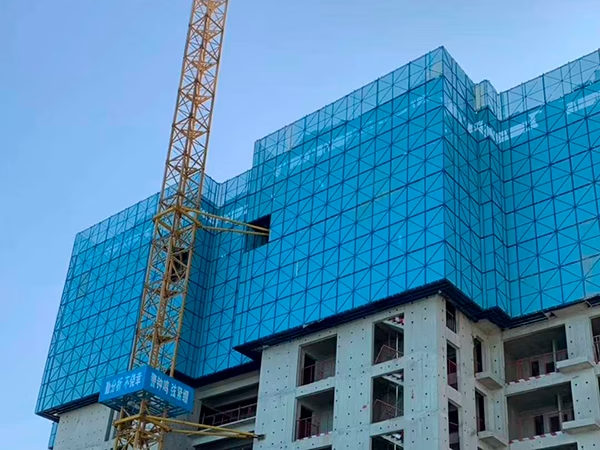
Furthermore, self-climbing scaffolding is also suitable for the construction of special structures such as bridges and chimneys, demonstrating its wide applicability.
Industry Standards and Specifications
The production and use of self climbing scaffolding must strictly comply with relevant national and local standards and specifications. These standards provide detailed regulations on the design, materials, manufacturing, installation, use, and maintenance of climbing scaffolding, ensuring its safety and reliability.
Advantages
- High Safety
The climbing scaffolding uses fully enclosed protection, effectively preventing the risk of falling objects and personnel from heights. It is also equipped with comprehensive safety devices, such as anti-tipping and anti-fall devices, further enhancing construction safety. - Improved Efficiency
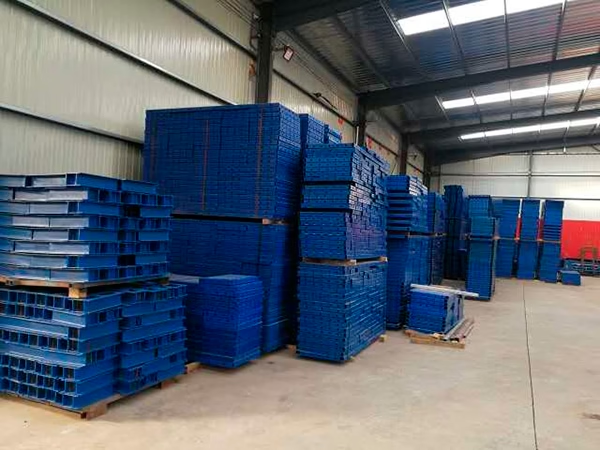
The automated lifting system allows the climbing scaffolding to quickly and accurately reach the designated position, greatly shortening the construction cycle. In addition, the modular design of the attached climbing scaffold makes installation and disassembly more convenient, further improving construction efficiency. - Cost Reduction
Compared to traditional scaffolding, climbing scaffolding reduces the time spent on manual erection and dismantling, lowering labor costs. Its reusability also reduces material costs. - High Adaptability
Self-climbing scaffolding can adapt to building structures of different shapes and heights, meeting diverse construction needs. Whether for straight, curved, or irregularly shaped buildings, a suitable climbing scaffolding solution can be found.
Precautions
When using climbing scaffold, the following points should be noted:
- Regularly inspect and maintain the safety devices of the climbing scaffolding to ensure they are in good working order;
- Strictly follow the operating procedures for lifting and lowering operations to avoid accidents caused by improper operation;
- Strengthen the training and education of construction personnel to improve their safety awareness and operating skills.